Prometei
- 89
- Global rank
- 54
- Month rank
- 31
- Week rank
Prometei is a modular botnet malware family that silently infiltrates systems, hijacking their resources for illicit Monero (XMR) mining. Active since at least 2016, it combines stealth, persistence, and lateral movement capabilities. Notable for its global reach and opportunistic infection strategy, it is also used for credential theft.
- Botnet
- Type
- Unknown
- Origin
- 1 March, 2016
- First seen
- 20 October, 2026
- Last seen
How to analyze Prometei with ANY.RUN
IOCs
IP addresses
- 103.176.111.176
- 91.189.91.157
- 91.189.91.61
- 8.8.8.8
- 185.125.190.57
- 91.189.91.64
- 185.125.190.100
- 185.125.190.56
- 185.125.190.58
- 91.189.91.57
- 91.189.91.96
- 91.189.91.62
- 91.189.91.98
- 31.56.209.100
- 91.189.91.60
- 91.189.91.58
- 152.36.128.18
- 185.125.190.101
- 91.189.91.97
- 40.126.31.0
Hashes
- 56c82365edb1088db0c0c18905e3b5f9392582a05bb8372be1b7a78926ad4a1f
- f5f7be5eaf5872aac84017555acf393efee0d4aabe91fd29d3f87cdb87fc948f
- 8f56706284447515ec73a30d7569f84c8a7270c1f769e04d19147083d8dc637e
- 6e0399bbd6a3b310aaf979eaf48498842ddbb89a73280110e90b77408349a171
- fad39de0b458050333c85c0f2cefea5b7dac3007683e1e61fc3caf40f7891145
- 95079946dfe415aadbf293f1c6ed30da3ab34c2f52d3ca71dc7b6a60853d1491
- 13bec093eaf4c11d6d4aaa2b331c7d1db2f67f6b5f89bfaaabd01eac3068ec2d
- dfa1493635340bc088351229402a4bd98d1f0cdfc4c2dafa40ab66bf2a177a21
- cc34c24d7791dfc84756469b6f379a4672e6c64828766acb8dc61e4584ae4809
- 025142b138a9c46e15ec8b412cfe96f070912abf9ce6e42edc10557f5551fa28
- 791163aa1825717ca9f53e15165e49a75e431094bb8de709f71ea02ad5b0babd
- fb7208baea53978db3e702c880a3e58991cced0f81329fd5253501291d189002
- c22621982c97580c6bb782a0d3e051157aab7a3c02d0f637f5c2c921d09d04b7
- 4db3a4327d6ca7c4b24308cfb763cede6f95798c6248a84f0aeb54b4d7590a37
- 72e4dd7681a820c5d526a0c0f525068de28528cb60d4094b303dad7b1d399cbf
- b204e37c0d0ba06159d3d5ba794f26aa87867885aab6d20dc21e2ffbe7cff5fe
- 2f8422e3a352e22a07d36e7b47ee491d1f77b129ddd0d570ba0a4b727ed93742
- 8593349dbc4df50375bfa38d4f515a21fe64aeb8d81313225b387f62c4a15e7e
- ca0cc4291de7ec5f349cc9fee920b7dcbaceb0d76343508233d723fc943f74e6
- 0a16883a25d4d859ad2907f68981cd4c480d9bb27c2511de90e3d372162e5729
Domains
- ntp.ubuntu.com
- connectivity-check.ubuntu.com
- google.com
- 5.100.168.192.in-addr.arpa
- 7.100.168.192.in-addr.arpa
- 3.100.168.192.in-addr.arpa
- 6.100.168.192.in-addr.arpa
- 8.100.168.192.in-addr.arpa
- 4.100.168.192.in-addr.arpa
- www.google.com
- cmd.exe
- play.google.com
- avatars.githubusercontent.com
- edge.microsoft.com
- oneocsp.microsoft.com
- api.github.com
- api.bing.com
- config.edge.skype.com
- th.bing.com
- c.pki.goog
URLs
- http://connectivity-check.ubuntu.com/
- http://103.176.111.176/cgi-bin/p.cgi?r=35&i=4942l5u16e05j380
- http://103.176.111.176/cgi-bin/p.cgi?add=aw5mbyb7rsrsu1favwf4a1ezctznwenlugdymzvud21ybmvkaw1crliyvmvytlzxthfutufuvmxxagtsmknay1o3s1pmqnzwbzl6cxfidkdby1lpumtttg9tvnezywv4r1qzrwo3mtrtr21cegjxbmvybzvbvjnpt09fustuunf3u0tkylftslrnzzhnkzzvbstid3dywxlls1zrbwriynfxdknsedrsy3plz2wvaw9ua1dyywj6c0i5vjayc1vnajhyednhvdqybdv1ykzstm9yyudzuhg3mmjpbhjzcg4wq1pjtwhwejlwwmjvytjkzhzvcgfemnnezdduvhhdbhjvsw53nwhoc2e3tdrrvedjytnsmki5d0xmuhcwadfqnzvybm5ovwtqdey4z3y0dnu4ae92bdrennjvr1pmrffnrhnqqmq0q0p6vvjhodrxywftaxz5uhn4vi8wnmldb3rosunobw0wzmgydgvqz0pxmtvybwruvwqvahzkl3fqsjd6qm5imxbtztbutwlnrgnfcutiyjfvm0urytdcmvnfl2huukzld2dzmfvxt3j3emz5zvmxqudgv0rfr0c0mjzsqwhnakzvkzz2vvrwd0zsevi2uhzcouxvrvf5bhzynnfnvk95ti9qadmwylm5endvuvi3b2tnb2nlq3d2z3zsdlzzvtzrewfkmgk2oepuzflxedbtzvdzmukxtmrxcg5npt19&i=4942l5u16e05j380&h=e$rsrhoa8+gts=&enckey=kbmw17enm7hqrvjcb8y290jderdtrtrk8ufwmtecxohwxfc4jltaxemtv+kcjonegfsysc2j0zbt4hpsowglwvscqyngjxve3wtxvwphwlyage6punceulzuegvsnhva5oxp+6blfctpv723sv6yj9qt1vx2x9opdk3pvslbniu=
- http://103.176.111.176/cgi-bin/p.cgi?r=50&i=ryqe623n4bi0jlgs
- http://103.176.111.176/cgi-bin/p.cgi?add=aw5mbyb7rsrsu1e3vkltaytnmxbdtenmsnvsz1pyslmrumlmcevnrgrxbgkvzjdlwhfnyuzktxjtatbnr0tdwk5fz1hinvhkzjvylytsafmwa0tzr2jkndnrk1zjsw9bstqzwcs5zgs2umhfb2j4c2voukj3ejb2cithvjjsdzdxsjvsoxjpefc4qkpusfz0bw5hyuxtv2ddaudyajzimmxnedy5utjvr0vnc0yvuvpxykh2bwvzdxppsuxieklxoxnungfmng5lm3blwkg5zmjnb2qwvdi0rvzjchdudzrxn1hrqkpgdgh5b1bxtjhnwdrib0pnast1wmxfl2xqwkhjl2u0sjfsbfjcehi4axbpwit5vg9ysxdqz05putf0cnnpr2jfbdg0nhvjmezqelryz0zlndi5exztd05wnuk3s3k2vufzvki1z2fonedudujndwjrvddptfnrwuhzckzjukjetmhhvzzlztzsdmxyv3pkchhxnjl3s3budtz5sjj0q1g3m0ozvxbaou5qs3dwevbazgzwafvubxbqdxaybzbqtwvmcfnmyzf3qjhqvvpewss5mhdht1eyrw5qakkrnhkxrmlhrgdmtgxoc3e5qwhitwziv1jjamtlrfzbqwvnuxdtq0xzr0zzuec4djduwwl0vvzhywtuunleumjayljpy2vldffhtunyz2rkblr6dxo1v0fvuenushvrzmnrpt19&i=ryqe623n4bi0jlgs&h=e$rsrdpif+oow=&enckey=72qkoq09bdniosjhqmcbguepvcpxy68+dtjow59m10kkcnbcyqgfycru4b6tzuphenl7695ekiddntzqncya3m7pvjrihzt3ah05wkymkhlqvc3l9ezjy3uu32f1dnucwbsc7msl/3f/mv3s+6vzjmuwmmx7s5udjreri0jrvp0=
- http://103.176.111.176/cgi-bin/p.cgi?r=43&i=8gbzzi64836s40o1
- http://103.176.111.176/cgi-bin/p.cgi?add=aw5mbyb7rsrsu1qzcunqymg3odrbu2ftwmxasw4yvmyzzhrpnufuty9tavrvztzabglyeflwumr1u0rktmhwt29va1mwq3bieul6oxznm2zca0daaefmrkiys0juztrjvc9gagrxazvyowsynkc2ohfimjnleflisxvfudziz0nntstlsg14qkh6tuvpc3ppynjoyze1c3c3mffrcetpwunavej6ovryrxp6dkxuelvnqw1wtla5rzm5n0tzq2flaup4cxdgutzmtgrzd3fialjmelbivjnynndqbfbky25imlcvc1f2sg81wfbjznm0tzfmuefvu1e2cw9zzxvwdhblcnrvmvlsavpkmvazrw1az1j2vufqqldzejnbcjdiogu0as9lm2xsslo1uug5b1eya0twnfqrdvfzczbda3dycm12mfvrc3nhztb6qlrhzgnqmunhc1vpcxf6tedrq0u1qmnwcllhoexybxjquglfl0hek3bovnext0dwunhtyxixuu5ik2nkr1bjmld0qjrqzxg1ei83stfcwvg4we5mrvn3cupmsgqxthztnfr6eevjstlysu90mljxulljoeo3v2c5tuxjmeqwmgfmn2jqzvzjsvvzsc8zyvjkbnlrn3vrwu51l0jzmzhkby9tl1bar0fmstzldml5vejpmwy3buq0rnbdzwhxbm1srtrmy0s2bldwcwm4alb2adrmmxl3pt19&i=8gbzzi64836s40o1&h=e$rsspwcub3f4=&enckey=fzykmostizvbshsh443old1qysjm3qvf9asnkisguv/mx0yivttvbnyn/7cgf5xu18w+jmtcrj5fiwxxbbucvawgl1cuiwsx1uyr1aljlaipyyxsx6azfvrjznhfghg0k+eokzy30f0bu5jjuqtv99vu1dg3el0wmm+1r1a86xw=
- http://103.176.111.176/cgi-bin/p.cgi?r=35&i=vhi2ny1xvz1sxnu5
- http://103.176.111.176/cgi-bin/p.cgi?add=aw5mbyb7rsrsu1e5struzmp1wkdlzervcutebllrqm4wztbiwxvicdd4yngvbjductlxk2rrv0ztt1jfwfbkcc9psedwd3lrdtvlvmtudzfpmkf3zgzpawpuufvcmg5kdjrsrk5pnxhvccttemzianbpr3ivk1hbmkh3qndtymjna2y0rda0b1zdtu5mquvpmtntus9vvvd2r09qoxbynel0zgz3blb6nly1dm0wofnysw5ztuzteitjvg1la2p3z2xmqvfqetzsdlrdzzzumwr0s25jck9ia1hsvna3efort3jvm0jicu95mu16wfjlvnbiywvwtnpqzkfsogh5skrbq09auezkc0gvnwnoelbycytrtfmrc1lfvjh6dtdwtlblampkztdmc29mbmhbc204ekdcyitntfzkczhhrxbyc0zlvmevvss3swtzbujmv0xvzun2skzqtmtptmxptlm5vzlmcehhrknrohrzdu0wbe80tzuvbjvsczzickxswekwqxrivgcraudur3y4zxhqr2lhvnjvndiwvzfcm1dkajqzdwfny0rkcwi4quc0zxvrk3fkwlfgrtg5ekpmoufobc9dvvzsy0x6uffkava0euvlczmywkn0whpsnffoq1nln0l3qm1qr2fsuhcwsfuvcwxuetngmxlyq1vwzddvs1lyy1plvitxrnvjmc9wugl2lzdmuxg3tekwmeftcfjbpt19&i=vhi2ny1xvz1sxnu5&h=e$rsrfs4qf1kc=&enckey=ttxmxm+exhe+8vryvirfjealljvgsohd/ihgvp5pi1toqnnpdgq/kbyy5ccaszakmkpitclaccffspo7nl8pi+y7ivj0kh2+avjcqala/uv+hxcmbiz7ajumftmvky3tl7ahlhtx8mwyp8jqo6hq+7phoi+b1fn3stuzx8e6u1w=
- http://103.176.111.176/cgi-bin/p.cgi?r=42&i=2mbr26z21rp444b7
- http://103.176.111.176/cgi-bin/p.cgi?add=aw5mbyb7rsrsu1nbqy8zoc9mnhdtdzfju0zld0rjtuhyoezyvlg4wg11slppu21zn1pkzmvgohu4mvlzzu1zv0xvnzq1rmx2tlqytnrmynz6cfgxveh4akzory9tuxlra0xksdlkk29jm3duse1xm0tsucszzxddntd0uulovfm1oenrnk01anvgefzsumzozwrpm05gnwrrqjz5mfnln3m1ze5ydhz2di9lrg9jtgvzenq3mldkem5sqnjjbuvid0pxl1dnkzd6k2rjtnf4czrfczlwmwpws2z2zm1omvp6euh1s3q3tzm2y1rzbdaxquv5r0wvr3bxr0jitkp3rwlgwk5vmvvfbdnsl2uwwwporerjykxwdjhemk1kykhiddjwyjbpylfmb1djze52owe0zetttwerdmrnownyekt4q3nnv3g3de8rumhwu214mzb5wjhta2jpveddlzvpelj4atrndkxhwmvnwwlcmfpzakpvn041stzqswu2bxexrmk0auo4n2ltneddwju2mumwukjyoep0tepmms9dufhrmmlhaxq0nhrfkzh2swyrnur1wu5pnwxud0vovwr2ykrntzhpunu0q1plwxm1bnppy3vvmfdhvxpioxvxevz0utrsd3rhzgyrbtm4mel6cfc3adbbwu1mtlora1lxmfkxb1z3ytnjc3p3ykvoq0y4l2nfmehcrg9tn0vqthlwexpxzz19&i=2mbr26z21rp444b7&h=e$rst4y/6mp78=&enckey=wacjh86tva7wyfdqxtpqvf536zlsvf8efxepzcyag88h1v8ooqucgtwzolzzbxxcbzsfvleeix0sx1pwyoxxu3hakzja2vjxtlaobnvroy3caffp5evj8ftd/mkggfkpcqq6p7pt/j1ghguwftr1reu+hysf4f9jxbn1c7uabqm=
- http://103.176.111.176/cgi-bin/p.cgi?r=18&i=v6nom61129zx091f
- http://103.176.111.176/cgi-bin/p.cgi?add=aw5mbyb7rsrsu1fdci8vy1faakd5be15enblwky0whllsgzrs2cwwhrrdxfewnbjrtm0des5tdrtnvzozfhxrnfonhj4qudmvepidmtzq0nisw9oahnkyjvybvlcn0wzqs9ycuzoevnvrytzru1uzulqqjrta2l1m2lxndlzect1yu9vvxhrquhcbfm3afvvz1j1yjmzedbtuejntjjkanpzk3zwnljazmz1ndjfzjvprg04vtbywfbonjvhnup6cldjvxe5ohjsvktzwnf1v0grwwxkmxbpyxlqulvfvktcr2zaenmwrvhbbnhxr3jccvdlqm0zu0pwqljiumtgbjnicudbzlrssvbwykvzvxdycgk1wfvtrnbxylhhwulxmwt0t0lra25ptflvzvponzhwanjrtlc3swzyzzljt2s1dfi3vvpkqjhxvuu5afvzakt4q0xcmehobwdrdk02bln5tzexaw5pqjjnaforqkporgvnanffn0zhqvluttvzcjdrvuxzmg1ymde1mxvkmuc0bug1ddd2rtg1rlhwb3dneel0vhf3vfbemtjwz2zpqmfbcknybvbsvejputzemwiyr1fma2dnu0hnn0hdsfbmdjirq3ivt3kxqnnzt1v6q044wum2nghsuunbbxjgtxzvmtjmctn1oupptkz0s05rajd5c2t0vll6unvszgpzafzrmdfpvtvrudczcmsyrmfzdz19&i=v6nom61129zx091f&h=e$rsr6x/ygg9k=&enckey=eqt4m9evxegagexzvq24dok36rkqxtiogq+x07hup80we/cqofb+1z+7n/3ploe39l5jhxw1g9alwbw5esuo7mtqurysskulb1bu+uwwhi5juhi+qm5pti+vdt6zuljde76sql+18cuajxio7wjdj2bul1qvuhtk7n+y+j5qcym=
- http://103.176.111.176/cgi-bin/p.cgi?r=27&i=4f8901017g3p106j
- http://103.176.111.176/cgi-bin/p.cgi?add=aw5mbyb7rsrsu1nfulbyvdjuufpaqk1ktdvjd3vleu14dc96d1rhuuzmzvbgu0rjvnvleluymwdvrujgsufbswx3uevrrmhwy29ustbwc1zotvvdexbttzzfwi9fww9od3zpttrgeg5wne02rhnwwdbxrmj2r0vnr242z2rlqthycuneqlftmuzsofffzhvbnmtan1b0ceniwk1or21hs09knvzydetvk2fbrehwqwdjawpwowrwrffru1zszfvtrkrrtfleogg0su82utjvk0rqrvljtk1hzwzrt3hvahhsselotxr2a2nrn1dbkziwr1vltmpesdjsc1r3cw9bnhi3s3lqdfuxd2xgy0hfuvlvrupxugppmhftwg9by1j4cmx2ynlislfhsnjvagi3v1lenvdcmhrlckflz2j4t0rumxbza2zecxoreu1mbmhoqvfdcufpz1pqr1znwm81tmurahnkmedzcvpvmtgxr1bit2yrnefnlzjtzzbnaw42m2j4ntl0zkvatk1yevzmrmxzs2xueuzhcw1na0mvd0thbgrrewm0zhzqelrha3ntag9angpwv293os9gotrms0pgqkfnwlvkv09namhnnmrpnkzzcw40udbennurullheuz2sez0c3radui0nlq5twtacwnvz1cxcmr2bnvxr2tsvufjl3k1zjjrwg16vznxbhjpczdpquxpqw85y1jnyzmvzz19&i=4f8901017g3p106j&h=e$rst8lpajg3i=&enckey=ozitzpwuuaraln7k41+7cqihaxi0u5yqxgzmdws/eovu3uftinjn0wjfe7594tiucrsrzp6c6wgrwyfvztnx0tmo4kv6x+ixcxmgcvhobhgmpdetcim7ubgnueggxnnu07gk3mz+6ztibltgpmyrwmzykahdpfysee6xs+jiwz0=
- http://103.176.111.176/cgi-bin/p.cgi?r=21&i=f4fjnfz150sevq3j
- http://103.176.111.176/cgi-bin/p.cgi?add=aw5mbyb7rsrsu1ncwvfznwo0yknwvfdprlmvk29rzxljyit6q1zlntqvmtj3vlplv1hhzhuwu2xyak9sc1rjl3u0zgnqa0d0ntraz2tmq3hkaxywb3lyn2q1s2pxbnfbzkr3l2luazlovjlqwufhatjqc2xwnxjmwm5lqxndzxhiawx5ru91wmtlyvnrc3jibdnuu1vlmmp2y0zmnwmwvgw5evzzr3nrq1hyvss2twhyb0l6owvqttbpb2qxndbkqwp6tjrmnutkdwhrlzdpmlu3ajjkr0x3sy9stzngb2ftuzzlukc2udlraxp1mmhrr3e2ruvyttgxc2svr1pba3ptzgpfzdbfsulswedxqk1kmxnezvnztdc3btjuv0h3quj5mwjloxm5ae56c3lxtmjtrmzwqutucvfmd1n5sk45nddoynjyv1z0emlmcxdjehhvqnvzovj5m2rrum5yyvdpv3jlrxnuehnnz2xynzblwdvlnhl1zjq3rjdmedy1mmzkd3lwbuoztm5idljuadhnwkjkteurtdnrvityou01s2vncxawemrizkdedgvhcnfhn1eyzfe1oedysfhhk1nlsgvzvvvsevqycfcry1vsv0m5vudwstnztzzrvthnme1qsxdnek4ruvjdewyyzkgvc3crutcwzdfydmziefbls2h4tuxrsm1jzfqysjy1uehnq0pmvvntutdjagtlwddbrt19&i=f4fjnfz150sevq3j&h=e$rst5cqvj1cc=&enckey=xpd4l7mdjd+sdn8o57lnfm8ltbgg+ndszirmgsdgphfkbkw9unldu+zyz0ihdgm/lzjxytwhji1v3sxufpy3/give1657dzyvhy6zrlhnbgbpmmahvtb8qhie9jcmrypadfjc1ye6r8nkfdkbj7vzkr9x9ghsdemowlcozvjlfm=
- http://103.176.111.176/cgi-bin/p.cgi?r=38&i=gmc2051o5bkal404
- http://103.176.111.176/cgi-bin/p.cgi?add=aw5mbyb7rsrsu1nhl1vld1d4bg5ju0hrmzyyvnnsu0dmvmjbexd4os93mutkmjlkl0rpsgg2eghpzkhhzwx6b3e4vnjqzkgyuge3cxloae5zrlrktu8wnwhky3lgwmr4s0dyrfbhcte4bnhwsko4mhhzyw41zw45avq0us92etjiq2dubw4xyvpwofzmrgziv2flcgxmndjydfzpsk1zvxfrm25cmxcwbvbdbmowqkm4t1m2c21wt3y3bgewwfdlvufiywm2r2w2anroru55nxh3v1p5u01jtwf0oxuztnuxbwllmehhr1v0ni9rew1tawzqmxo4t0hboeppwg85n0u2tkxiogrid1hyshd1densrtficgmxegr2bw1tqvuzdytjvfpluvzxrvjqckttq09bz3hgnctyte9zr0xennb2uxritk90oxrumkfkmnz2l3honk9psem2dwx3wth2sg1wmlbmtstwnc9tuhivy3rioffnsdfcemhicndtuthvcwrnszcrqjvszei2axdzejlxb1c5k2zqajnioehuvwmrcvbhuxbsqw5xcfyxbvhguuq0skx1yjzobuqzuldoyvpqotfnvwncr1pzvkxmnis0ykzla1j4uetgb29yatjnk3rncvzwbw55vhi1m2lzawnjnzjjtudtv3fbovn6uc9yvvo0qnzjmxg2r05wdlzkufrqvjhwqnowt3yvm1uzc1d0zz19&i=gmc2051o5bkal404&h=e$rst+lutqavg=&enckey=1d/wfq/f5o17qfoce4we4u8+w96wjmquaubgadi7mi39gaeqnvgzgo1fbnb6amvdkfaiqgkot7yo+ocsr1wdxgulqdsfxq8r2pso7zbkhtnaknf8atlsywuzzfin9kjndz4hry7ji4bw5tstgjtlxflyp3uzpcyae36+yekuqww=
- http://103.176.111.176/cgi-bin/p.cgi?r=43&i=7m4mn6niv326expp
Last seen at
What is Prometei Botnet?
The Prometei botnet represents one of the most persistent and evolving cryptocurrency mining threats in the cybersecurity landscape. There is evidence that it has been active since 2016, though it was described in 2020.
It is an advanced, multi-component malware system designed to mine cryptocurrency while staying under the radar. Written in multiple programming languages (including Delphi and PowerShell), it supports Windows and Linux platforms and is capable of self-propagation, data exfiltration, and command-and-control (C2) communications.
Its modular architecture allows attackers to dynamically deploy components like credential stealers, backdoors, and lateral movement tools based on the target environment. While its primary goal is cryptojacking, its deep penetration into systems makes it a gateway for broader cyber espionage or sabotage.
The botnet employs domain generation algorithms (DGA) for command and control communications, making it difficult to disrupt its operations through traditional domain blocking methods.
Recent analysis indicates that Prometei has experienced a significant resurgence since March 2025, with updated variants showing enhanced capabilities and more sophisticated anti-analysis features. The malware demonstrates continuous development, with threat actors regularly updating its modules and incorporating new exploitation techniques to maintain effectiveness against modern security measures.
Prometei Malware Victimology
Prometei’s victimology is opportunistic rather than highly targeted. It affects a wide range of industries, including finance, insurance, retail, manufacturing, utilities, travel, and construction.
It has been detected across the United States, the United Kingdom, Europe, South America, and East Asia. The botnet exploits unpatched systems, poorly configured servers, and devices with weak security, such as outdated Microsoft Exchange servers or IoT devices with default credentials.
Prometei has infected systems in over 90 countries, with particularly high concentrations observed in Brazil, Indonesia, and Turkey. Recent campaigns have shown over 10,000 systems compromised since November 2022.
What Prometei Botnet Can Do to User Device
Once installed on an endpoint device, Prometei can perform several malicious activities:
- Cryptocurrency Mining: It hijacks computing resources to mine Monero, often causing significant performance degradation. -Credential Theft: It employs modules (e.g. Mimikatz) to harvest login credentials, sometimes using the WDigest protocol to store passwords in plaintext. -Data Theft: It can extract sensitive system information, including processor details, OS data, and network configurations. -Lateral Movement: It spreads within networks using protocols like RDP, SSH, and SMB. -Backdoor Installation: Newer versions include backdoors for persistent access and additional payload deployment. -Web Shell Deployment: It can install PHP-based web shells via a bundled Apache web server to execute remote commands. -Additional payload download.
How Prometei Malware Threatens Businesses and Organizations
For businesses and organizations, Prometei presents multifaceted threats that extend far beyond cryptocurrency mining. The malware's ability to steal credentials and move laterally through networks means that a single infected system can potentially compromise an entire organizational infrastructure.
The cryptojacking component results in significant financial losses through increased electricity costs, reduced productivity due to system performance degradation, and potential hardware damage requiring replacement. More critically, the backdoor capabilities provide persistent access that can be leveraged for more damaging attacks, including data exfiltration, deployment of additional malware, or ransomware attacks.
The malware's credential harvesting capabilities can result in violations of data protection regulations.
How Does Prometei Botnet Get in the System and Spread?
Similar to other botnets like Mirai and Gafgyt Prometei infects systems through:
- Exploiting Vulnerabilities: It targets unpatched software, notably Microsoft Exchange Server flaws like ProxyLogon (associated with HAFNIUM attacks).
- Brute-Force Attacks: It attempts to crack weak administrator passwords via RDP, SSH, or SMB.
- Phishing Emails: Malicious attachments or links deliver the initial payload.
- Drive-by Downloads: Compromised websites or fake software updates install the malware.
Once inside a system, it uses spreader modules to propagate across networks, scanning for additional vulnerable endpoints. Its worm-like capabilities enable rapid expansion within poorly secured environments.
How Does Prometei Botnet Function?
Prometei operates through a modular framework, with each component handling specific tasks:
- Main Module: Executes initial infection and retrieves additional payloads.
- Spreader Modules: Facilitate lateral movement via RDP, SSH, and SMB.
- Cryptomining Module: Mines Monero using the infected device’s resources.
- C2 Communication: Uses a Tor-based C2 server or DGA-generated domains to receive commands and exfiltrate data.
- Persistence Mechanisms: Creates services, scheduled tasks, or cron jobs to ensure re-infection after system reboots.
- Web Shell: Deploys a PHP-based web shell for remote command execution. Its self-updating feature and DGA enhance its resilience against takedown efforts.
The botnet utilizes domain generation algorithms to maintain communication with command and control servers, generating new domains dynamically to evade detection and blocking efforts. This technique ensures that even if security teams identify and block known malicious domains, the botnet can continue operating through newly generated communication channels.
Prometei's self-updating capabilities allow it to download and install new modules or updates automatically, ensuring that infected systems remain current with the latest malware variants. This feature contributes to the botnet's longevity and helps it adapt to changing security landscapes and defensive measures.
Prometei Botnet Typical Attack Chain
ANY.RUN’s Interactive Sandbox has seen a variety of Prometei malware samples analyzed by its global community of 500,000 users. Let’s explore one to see how the botnet infiltrates the system.
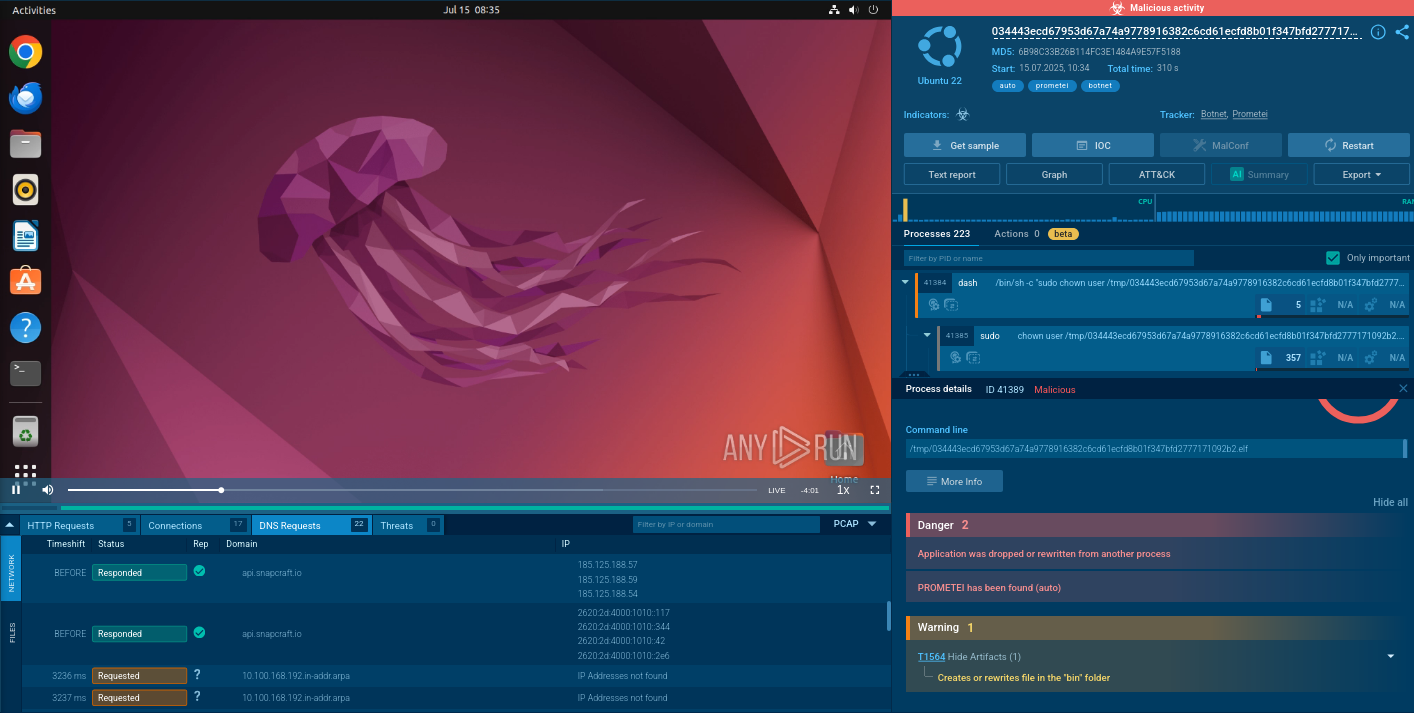
Prometei starts by making sure there is no older copy of itself on the machine. It searches the running processes for the names uplugplay and upnpsetup with the pgrep command. If it finds either name, it immediately stops those processes with killall5 and pidof. This step clears the way so only the newest version of the malware can run.
When the system is clean, Prometei creates a small file called /etc/CommId. Inside this file it writes a random twelve-character code; in the sample run the code was CPGP332GT4P7AH6F.
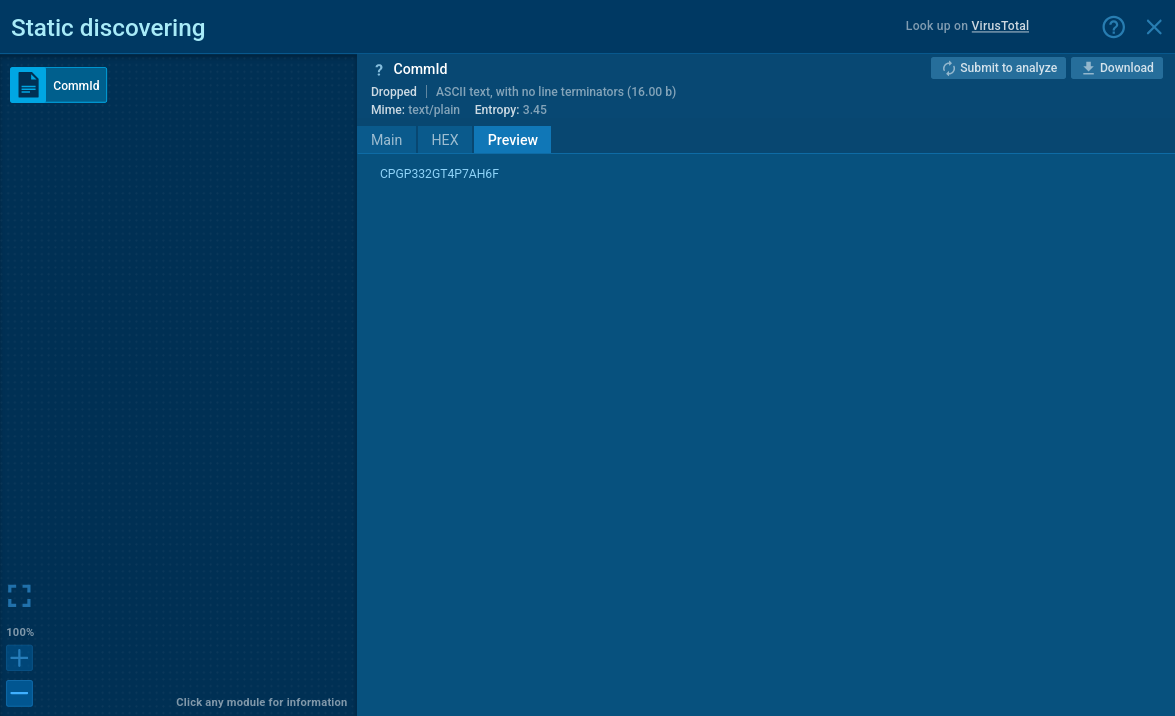
Right after that, the malware sends the code to its command-and-control server through an unencrypted HTTP request (http://152[.]36[.]128[.]18/cgi-bin/p.cgi?r=26&i=CPGP332GT4P7AH6F). The attackers use this code to recognize and track the infected computer.

Next, the malware makes sure it will survive a reboot. It drops a new systemd service file called uplugplay.service in the folder /lib/systemd/system/. The service is listed under the friendly name UPlugPlay and is set to run the program /usr/sbin/uplugplay.
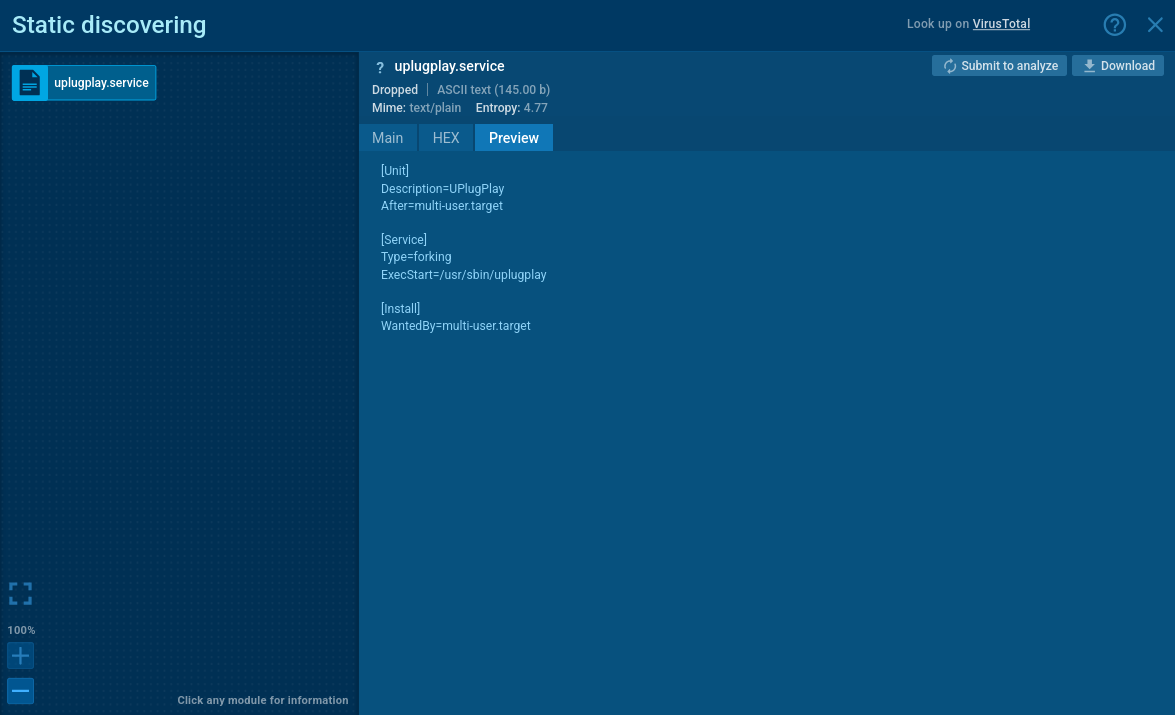
Prometei copies its own binary into that location, deletes the original dropper, and then runs two shell commands: systemctl enables uplugplay.service and systemctl starts uplugplay.service. These commands turn the service on right away and guarantee it will start automatically whenever the operating system boots.
After installation, the program becomes quiet. It checks whether it was launched with an extra parameter, so it can switch from the installer role to its normal botnet duties. The parameter it expects later is “Dcomsvc”, which would be used like this: /usr/sbin/uplugplay -Dcomsvc. Once everything is in place, Prometei waits in the background for more instructions from its command-and-control server, ready to carry out whatever tasks the attackers send next.
Gathering Threat Intelligence on Prometei malware
Threat intelligence plays a crucial role in defending against Prometei by providing actionable information about the malware's tactics, techniques, and procedures.
Behavioral intelligence describing Prometei's operational patterns helps security teams develop effective detection rules and monitoring strategies. Understanding the malware's lateral movement techniques and persistence mechanisms enables more comprehensive threat hunting activities.
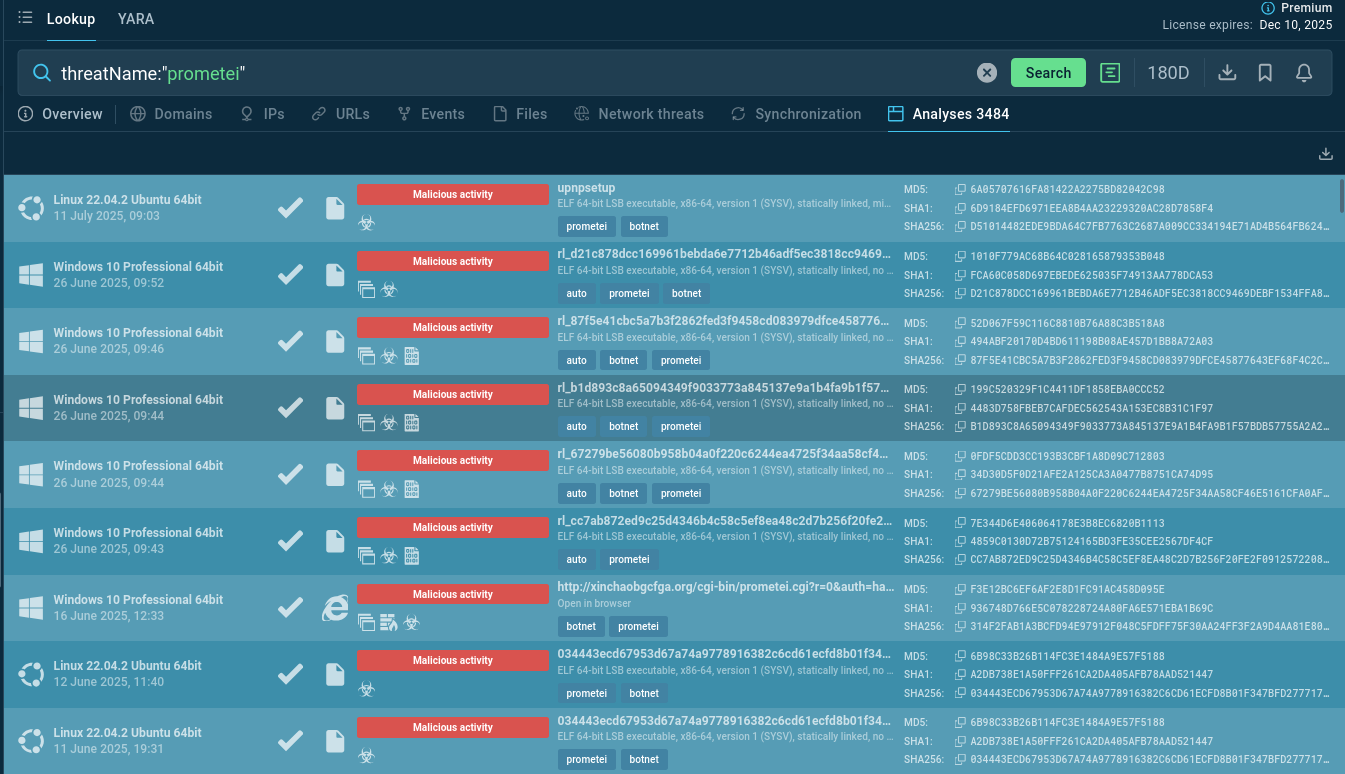
Start gathering IOCs and behavioral data with the malware name search request to Threat Intelligence Lookup:
Conclusion
Prometei Botnet is more than just another cryptominer — it’s a modular, persistent, and evasive malware that undermines enterprise security while silently monetizing your infrastructure. With its stealth tactics, lateral movement, and built-in credential theft, it opens doors to deeper compromise. Preventing Prometei requires rigorous patching, strong authentication, and proactive threat intelligence. By understanding its tactics and staying informed with real-time threat data, organizations can turn the tide against this parasitic threat.
Gather fresh actionable threat intelligence via ANY.RUN’s TI Lookup: start with 50 trial requests.
Other malware & phishing threats
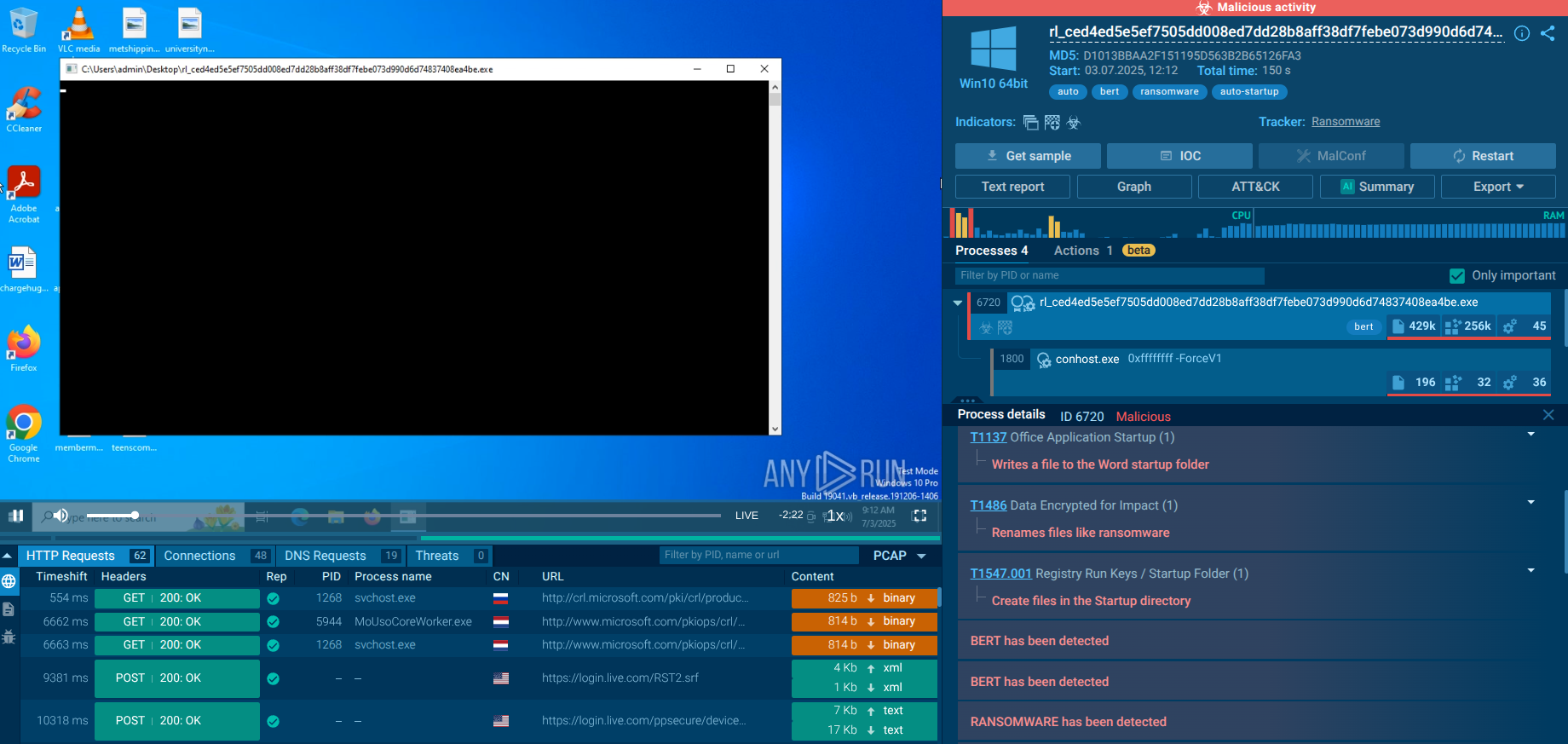 Bert RansomwareBert Ransomware is a newly emerged ransomware group that has been active since April 2025. It deploys variants targeting both Windows and Linux systems, focusing on critical sectors like healthcare, technology, and event services across the US, Asia, and Europe.
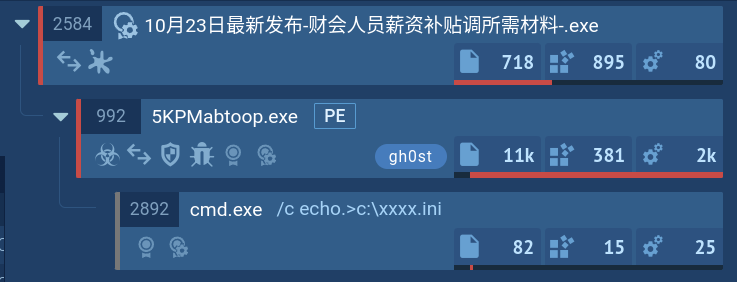 Gh0st RATGh0st RAT is a malware with advanced trojan functionality that enables attackers to establish full control over the victim’s system. The spying capabilities of Gh0st RAT made it a go-to tool for numerous criminal groups in high-profile attacks against government and corporate organizations. The most common vector of attack involving this malware begins with spam and phishing emails.
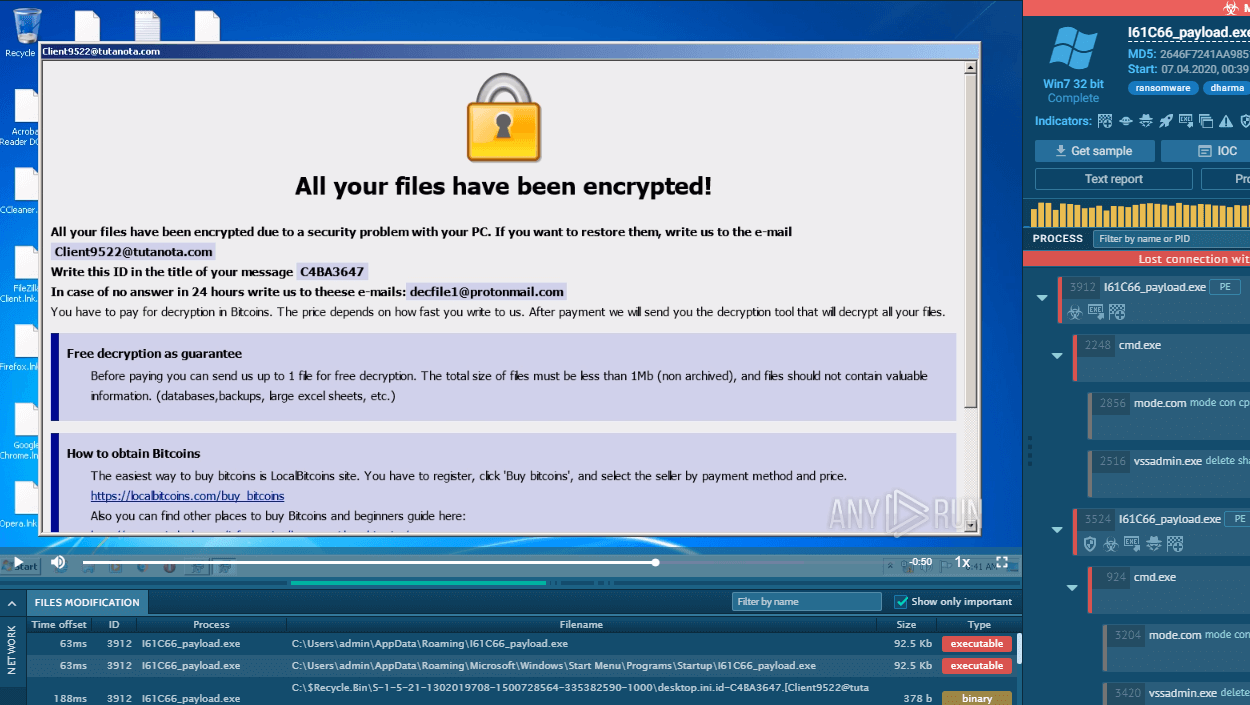 DharmaDharma is advanced ransomware that has been observed in the wild since 2016. It is considered to be the second most profitable RaaS operation by the FBI. The malware targets hospitals and state organizations, encrypts files, and demands a payment to restore access to lost information.
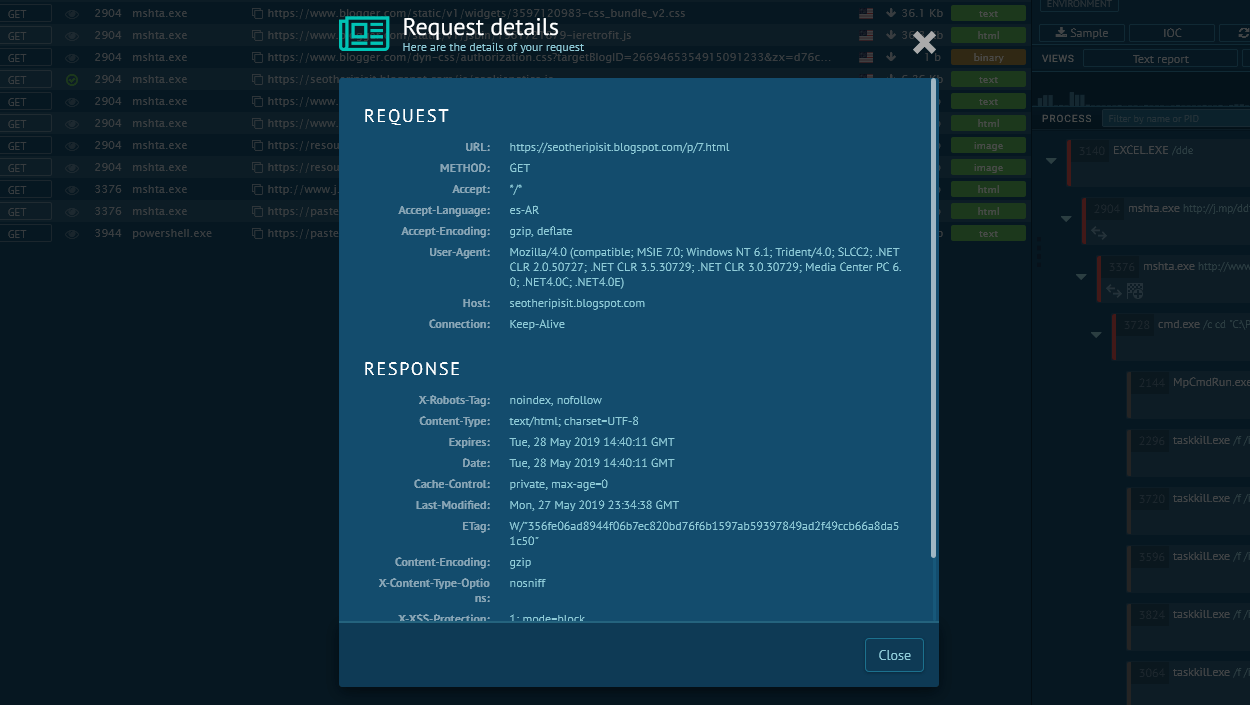 RevengeRevenge was one of the most popular remote access trojans to be used in 2019 when it was featured in a huge malicious campaign named “Aggah”. This malware can take remote control of infected machines and spy after the victims.
 SSLoadSSLoad is a malicious loader or downloader that is used to infiltrate target systems through phishing emails, perform reconnaissance and transmit it back to its operators delivering malicious payloads. To avoid detection, SSLoad employs various encryption methods and delivery techniques highlighting its versatile nature and complexity. It is believed to be a part of Malware-as-a-Service (MaaS) operation given its diverse delivery methods and implemented techniques.
 ZloaderZloader is a banking trojan that uses webinjects and VNC clients to still banking credentials. This Trojan is based on leaked code from 2011, but despite its age, Zloader’s popularity has been only increasing through early 2020, when it relied on COVID-19 themed attacks.